April 29, 2010
The dark hair of a twenty-year-old female college student gleamed against her long-sleeved white shirt. Her rounded collar denied even the possibility of cleavage. Her denim skirt fell well below the knees and she wore stockings with her sneakers. She complained that her matchmaker thought she was too picky. If I had met this woman in a Jewish orthodox neighborhood this encounter might have made sense. Instead, I met Tzipora (formerly Jennifer) in my private practice in a Manhattan neighborhood where even the dogs wear tank tops. As I heard her lament about her preference for Chassidish men, I had to acknowledge that this previously secular woman now devoting herself to Orthodox Judaism was not the first such character to wander into my office of late. Deepening religious observance is but one manifestation of people’s attempts to tune their behavior to a different historical note. The evocation of the past seems to be a critique of American materialism, an analysis useful in understanding individuals as well as our nation’s current political turbulence.
Read the rest of this entry »
Tags: conservativism, explanation of tea partiers, longing for the past, old fashioned values, orthodoxy, return to the past, social contribution to mental health, social convention, too much excess, traditional lifestyle
Posted in human interaction, mental illness, politics, relationships, Uncategorized | Leave a Comment »
April 18, 2010
A few years ago, a young woman winced as she described yet another evening of binge drinking, and the guy she thought she remembered having sex with in the bar parking lot. Her long wavy hair framed bright eyes that seemed to catch every change in light. Her arms, long and graceful, sat folded upon her chest. She had graduated at the top of her class at an Ivy-League college, and was now a young professional in Manhattan. Still, she spent most evenings out at bars, and her social life consisted of brief sexual encounters with people she either just met or barely knew. I once suggested to her that she try going to dinner with a romantic interest.
“Are you crazy?” she admonished. “Have dinner with someone I don’t know? I would never do that “.
That was my introduction to what is know commonly known as hooking up. Since then I have discovered that it is the common form of socializing in high schools and on college campuses. Denise Ann Evans made a movie about it. Tom Wolfe has written about it. The behavior is an implicit aspect of most reality TV. Yet, while limited media attention views the phenomena with some degree of fascinated voyeurism, very few remark on the fact that these young people are simply enacting everything they have been taught. What else might be expected from young people raised on commercials, treated as consumers from the time they were toddlers and flooded with imagery of the earth being violated for the sake of materialistic consumption?
Read the rest of this entry »
Tags: alcohol and hooking up, hooking up, hooking up culture, spitting game, teen sexuality
Posted in ecopsychcology, human interaction, parenting, relationships, Uncategorized | 1 Comment »
April 15, 2010

The importance of a sense of place to psychological well-being became evident during my travel to Israel. While we understand many psychological difficulties in terms of relationships (particularly parental), or development, or even the body, rarely do psychologists venture into the significance of space and place. Human geographers like Yi-Fu Tuan, Nigel Thrift, Steve Pile and Derek Gregory (to name a few) have written extensively about the mutual influence of space and consciousness. Clinicians have not focused on it as much, but my thinking is that we can learn about another facet of our minds from these geographers . Read the rest of this entry »
Tags: ecological unconscious. human relationship to nature, human relationship to nature, relationship to place
Posted in geography, human interaction, personal environmentalism, Uncategorized | Leave a Comment »
April 11, 2010

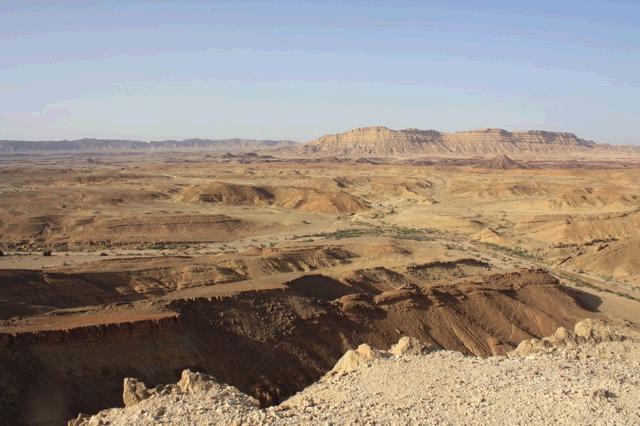
After passing through a fertile agriculture zone, one confronts the sand dunes of the Negev. In this dry, hot place, the evidence of human innovation is everywhere. With bold sweeps, the land rolls seemingly endlessly onward. Yet, human communities live within this the expansive collage of sand, rock, and the majesty of the maktesh, exemplifying the link between the possibility of geography and that of the human spirit. Read the rest of this entry »
Tags: environment, human relationships, mind nature relationship, Negev desert
Posted in Israel, travel, Uncategorized | 1 Comment »
April 2, 2010

As we leave the city of Jerusalem, we leave behind the fragile fabric of the diversity here. Tze-tze and peyes blend with young men in t-shirts and jeans, long-skirted women with scarves about their heads push their strollers past young women in short skirts, then a woman draped in cloth from head to toe continues on her path to somewhere unknown wishing not to be seen. As the city stays behind, the hills appear, green tufts of dense bush and grass decorating the sweep of rolling sandy waves. If the city is about the complex tile work of international (or interfaith) cooperation, the landscape to the North demands attention be paid to people and their borders. The land here invites us to interact with it. “Come play, ” it calls forth with a breeze that compels one’s skin to loosen and allow for flexibility of mind body and soul. Read the rest of this entry »
Tags: Galilee, Golan, Israel, reflections on Israel, travel blog, Travel to Israel
Posted in Israel, travel, Uncategorized | Leave a Comment »
March 30, 2010

It would be more than presumptuous to claim knowledge of a city after only a day or two, but sometimes first impressions deserve notice. Nowhere suggests the significance of place to personal identity more than Jerusalem. Perched on a hill, surrounded by a burgeoning and growing modern cityscape, the evolution of humans as thinking, feeling and generative beings rests atop this slope’s eruption into time. This is where the old city sits and it is mapped by different colored stones, textured pavements, and angled rooftops. Each configuration is claimed by one group or another: Jews, of course, Muslims, and a myriad of Christian faiths. Nobody can really ever claim Jerusalem. It belongs to itself with every rock inscribed with the marks of a different people’s story. The people rush through the narrow alleys, their national or religious costumes flowing – robes, scarves, head cover. Casually, almost without notice, they slip between rows of merchandise, or patterned shadows, to go through doorways or gates that mark an entrance to hidden worlds whose secrets can only be understood by their inhabitants. Ordinarily, we rarely notice how landscapes symbolize our place in time. Here the personal link to land is inescapable. The common explanation is that this is psychological, that people project ideas or concepts on to a place. After seeing the old city, I’m not so sure. These stone walls shimmer as though quivering from the tears of humankind. My first impression of Jerusalem and its people is that geography creates us as much as we do it. Here an uneasy truce of stones informs the geography. Intricate patterns made up of red, black, golden and brown tile express the cooperation and respect for each other’s sovereignty. It makes perfect sense to me that the attachment to the color of stone is profoundly personal. The chiseling of rock into the building blocks of civilization embodies the influence of landscape over who have become, who we are and who we will be.
Tags: jerusalem, reflections on Israel, reflections on Jerusalem, Travel to Israel, travel to Jerusalem
Posted in Israel, travel | Leave a Comment »
March 26, 2010

Photo by Annie Griffiths Belt travel.nationalgeographic.com/places/photos/p
These past few months, I have been exploring the role of mind, body, culture and geography in personality development. Why? I think I’m searching for some way to assist the people with whom I work, some way to think about their struggles that uplift humanity. Sometimes people need deep understanding rather than diagnostic codes. Sustainability occurs in the human heart and mind.
I will be spending the next two weeks in Israel. It will be my first visit to this complicated country. If one is interested, as I am, in the intersection of landscapes, physicality and the mind’s transcendence, the ancient cities of Israel, and the people who live within, may tell a story that will inspire an encounter with fresh perspective. Every experience deepens the one that came before. Starting Sunday, March 28th, I’ll share what I learn about our ordinary earth, from a new place.
Tags: Israel blog, journey to Israel, Travel to Israel
Posted in Uncategorized | Leave a Comment »
March 16, 2010
“Don’t tell me what is going on with me, help me understand the how of me.” AJ, a 24 year old male.
With the release of the proposed draft revisions (version 5) to DSM disorders and criteria, new questions have arisen about psychiatric diagnosis. Articles like the very in-depth analysis by Louis Menand in The New Yorker wonder whether or not the classification of mental disorders doesn’t pathologize the vicissitudes of human emotional expression. Jonah Lehrer’s recent piece in the NYTimes adds another element to the discourse about what is diagnosis: what if mental illness, like depression, has value? I would like to suggest another angle to this over-due debate: Diagnosis is a process, a fluid and mutable motion between body, mind, other people, culture and the environment. A diagnosis should not be construed as a territory with fixed boundaries nor a rigid categorical definition. A viewing lens can assist in the identification of a Downey Woodpecker but you can’t learn anything about the creature until you observe it flying and interacting with the trees. A psychological enterprise should always engage with a person’s process, and should aim to assist a person in the discovery of how all the pieces of their life come together. This work relies on experience and training, as well as science and art. It also depends on a deep understanding of the natural, evolutionary world in which we are all embedded.
Read the rest of this entry »
Tags: DSM-V, human relationship to nature, human relationships, Jonah Lehrer, Louis Menard, mental health, mind nature relationship, psychiatric diagnosis, psychological diagnosis, psychological disorder, psychopathology
Posted in human interaction, mental illness | 1 Comment »
March 9, 2010

from uk.canada.travel/ConsumerWeb/ExperienceDetail...
Some people have been debating whether or not scientists should become climate change activists or if they should stick to the data. The concern is that the general population seems less worried about environmental issues. Given our culture’s typical reliance on external solutions to problems, it doesn’t surprise me that journalists and pundits are looking to Obama, scientists, activists, politicians and economists to motivate change. As someone who helps people transform less than optimal behavioral problems into opportunities for accomplishment, lets begin with this fact: People don’t always act in their own best interest. Usually, what most motivates people to behave in a manner that affirms self and others is direct emotional enlivenment that connects to an inner conviction or memory. Let me provide an example from my work to illustrate how it might be possible to get people interested in climate change. Read the rest of this entry »
Tags: climate change, ecoloical unconscious, environment, ground up environmental change, human relationship to nature, human relationships, mind nature relationship, personal environmentalism, pschological aspects of climate change
Posted in climate change, ecopsychcology, human interaction, personal environmentalism, relationships, Uncategorized | Leave a Comment »
March 2, 2010
An adolescent with whom I work discussed the complexity of privilege. “My parents paid just over $12,000.00 for our family to go on a 5-day wilderness backpacking trip, with a service that provides the gear, the food, a plane to transport you there and a guide. I loved it and it changed me, like any amazing experience your parents buy for you. But the fact that it didn’t come from within me made it seem like another thing that someone gave me. Maybe it would have felt less strange if having that relationship to the wilderness wasn’t something only wealthy people could buy, but just a more natural and expected part of how kids are raised.”
His comment reminded me of a question: how will people who have been raised in a time of excess choose to live sustainable lives ? Evan Thomas said in this week’s Newsweek, “The problem is not the system. It’s us – our ‘got mine’ culture of entitlement.” I know the people of whom he writes. They are not of any particular subculture but rather inhabit every landscape from poverty to opulence with a unfamiliarity with limits and boundaries of any kind, as well as personal needs that seem small in comparison to what the planet has to offer.
And, Al Gore is asking these people to be the opposite of who they are in order to save the planet. How does the culture of excess shift gears to become a sustainable one?
Read the rest of this entry »
Tags: AL Gore NYT, climate change, ecological unconscious. human relationship to nature, Evan Thomas Newsweeek, excess living, ground up environmental change, human relationship to nature, personal environmentalism, pschological aspects of climate change, sustainability
Posted in climate change, ecopsychcology, human animal interaction, personal environmentalism | Leave a Comment »




 Ordinary Earth ™