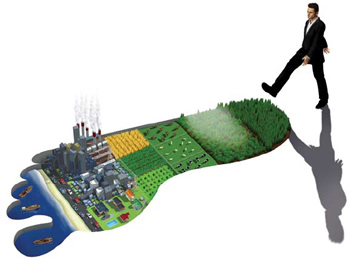
Social change takes place through individual and familial transformations. See this article in The Jewish Week for a personal reflection on what sustainability can look like at home.
Family Life and Sustainability
June 29, 2010Psychology and Environment: Summary
June 29, 2010
photo from http//brammerfamily.com
For the past month I have been participating in an on-line seminar about psychology and the environment. The seminar ended (see previous posts here, here, and here) with many questions. Do psychologists have any special contributions that can help with our environmental crisis? How can psychology contribute to the discussions on climate change? See my final thoughts after the jump.
Psychology,Psychoanalysis and the Environment
June 11, 2010
The IARPP environmental and psychology seminar continues into its second week. The panelists have been asked the following questions in five subject area.
Human Geography:
1)Are there unique psychological states of mind that correspond to different geographic localities?
2)What happens to the mind when the environmental localities begin to transform due to environmental corruption, climate change?
Cultural History:
The environment, nature, country, city, urban, wilderness are all terms that have had different psychological meanings in different places and in different historical periods. In what way is an understanding of these shifts and progressions relevant to an understanding of today’s current environmental problems?
Field Data:
Reports and observations of psychological reactions, responses and changes that are taking place in response to ongoing climate change issues or environmental disasters in parts of the world with which you are familiar.
Personhood:
1) As the world becomes more technological and human life is conceived as increasingly independent from their ecosystems how has that changed personhood?
2) How does this vary between cultures/ecosystems?
Defenses and Excesses:
1) Why are people participating in the destruction of the ecosystems they need in order to survive?
2) Why aren’t they more activated by climate change?
3) What are the psychological obstacles to change?
4) How are those psychological defenses embedded in economic and socio-political systems?
Sample responses after the jump.
Psychology, Psychoanalysis and the Environment
June 4, 2010
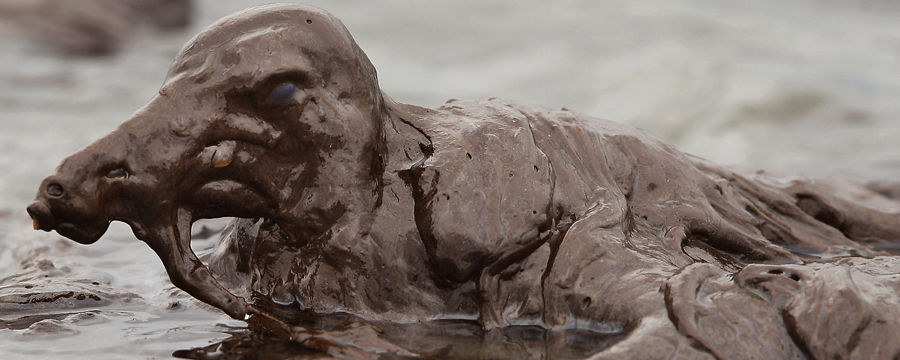
The environmental seminar at IARPP launched this week with a mix of emotional response to the Gulf Oil Coast and some salient points regarding the interface between psychology, psychoanalysis and the environment. Many ventured to discuss the significance of environmental devastation on life as we know it. People’s lives are being affected now see here and here . Most expressed a passionate and challenging set of responses to the Gulf Coast oil spill ranging from sadness, fear, and apathy. Here are some salient topics unders discussion so far: Read the rest of this entry »
Gulf Coast Oil Spill #4: Teens
May 25, 2010
If you are wondering just how bad things really are in the Gulf see this ABC news report. Philippe Cousteau (Jacque’s grandson) calls it a “nightmare.”
Transocean is holding a memorial today for those who died in the Deepwater Horizon in Jackson, Miss. .
People have died. The US government is now calling it the worst oil spill ever.
While most adults seem to be taking this in stride, rationally calculating the ratio of a country’s need for oil to the spill’s impact, many kids feel defiant and betrayed. This is their planet. As they watch adult authority figures still unable to stop the flow of oil into the ocean, cynicism molds childhood laughter in a wary grimace, the dull mask of survival. They believe that the world they know may be coming to an end, and sometimes, as one adolescent explained, “it is simpler to just harden up and ice over.”
Another young man said, “The subdued reaction to this crisis makes everything seem very false. As long as everyone around us denies that these things are happening, we tag along: the as-if generation in an as-if world.”
Three teenagers from New York City’s Upper West Side, however, tried something different. This is their story and here is their petition.
Gulf Coast Oil Spill #3
May 20, 2010

The news coming out of the Gulf coast suggests that there is a great deal of denial, at best, or according to some scientists quoted in the NYTimes, an actual suppression of information. Brit Hume actually asked, “Where is the oil?” (See it at climateprogress.org). I suppose he hasn’t had the opportunity to check in with sick fishermen. Just today BP is finally announcing that they may be underestimating the amount of oil washing up onshore. Excuse me, but wasn’t that obvious?
The general population (outside the Gulf) is paying little attention to this event. There is not as much outrage or concern as may have been expected given public reaction to other crises. What is going on? Consider that this event may simply be too big and too frightening. The human mind shuts down when there is too much stimulation, or, when threatened it shifts into ultra-focus. This can cause people to diminish and ignore what is happening. People will blame the government for not acting strongly enough. Yet we should also not forget that few individuals have demanded that their government take this seriously. For the most part, people here in NYC are enjoying their lattes. While this makes sense given what we know about the mind’s penchant for closing itself off from uncomfortable information, it is the human trait that will most directly lead to our peril.
Yet, there is enough education to counteract the cognitive hyper-focus that keeps threatening events out of an individual’s attentional radius. Look here for a local take on what is taking place in Louisiana right now. Perhaps what is really making this hard for the average person is that this is the world upon which we all depend and no one wants to contemplate what it might really mean if this is as bad as it seems. Plus, acknowledging the magnitude of this disaster confronts us all with the reality that those who we have empowered have taken advantage of our trust.
While it may be hard to accept the magnitude of the oil industry’s betrayal, it does seem as though continued blindness will hurt more. More graphic photos will help break through people’s defenses. The worse it gets, the more painful, harmful, dangerous and ugly this becomes, the more the citizenry may wake up and demand honesty as well as policy change. Yet one wonders if it might be too late.
Update
I have been told that a few NYC kids will be holding a bake sale to raise money for Defenders of Wildlife and the NRDC, both of which are raising money for animal support, petition drives for climate change legislation, and to cease offshore drilling as well as legal action. Let’s see what happens. I’m curious as to how passers-by will respond.
Update
As predicted there is more graphic imagery, and people are starting to get upset, Chris Matthews calling is the “scariest thing he has ever seen“. Let’s see what happens to the person in the street.
Chronic Leaks and Slow Burns: The Impact of Bureaucracy on Teens
May 20, 2010“After all the test preps, and all the focus on getting things just so you can get into college, I feel like an empty shell. There is no me, and the person who ends up succeeding and getting all that stuff isn’t me at all.” KF, 17 year old NYC teen.

Photography by Cary Jobe, By Kim Cross http://www.southernliving.com/healthy-living/healthy-outings/get-nature-00400000008169/
As BP finally siphons some of the oil from the Deepwater Horizon oil spill, it will most likely fade from public attention. The same can be said for forest fires. Crown fires that spread rapidly from treetop to treetop attract attention and frenzied intervention. Fires that smolder beneath thick layers of fallen leaves can burn undetected and destructively for many acres before anyone notices. The mind gradually assimilates most long term chronic events, and it can even seem as if they no longer impact our lives. Humans have an ability to get used to almost anything, a trait that is adaptive in the short-term and destructive in the long term. The mind numbing defenses of repression and dissociation are the cultural equivalent of bureaucratization, processes meant to dissipate and nullify the possible emotional tension of group behavior.
David Brooks recently expressed the feeling that Elena Kagan was too perfunctory, too organized around success, not inspired or even inspirational. While Brooks is wrong about her, I believe he might be on to something very important. What he is describing is the gradual dulling of individual expression and intellectual risk-taking brought on by the culture’s emphasis on an overly bureaucratic, professional and strategic presentation of self. Ask any teen in high school, like the young woman I once met who was interested in a certain 9/11 project for her college resume. Teens will tell you how the continued emphasis on the externals of success and the neglect of powerful socio-cultural values gradually wears them down.
Gulf Oil Spill #2
May 4, 2010

Read this. Krugman echoes comments by Glenn Albrecht. The surprising issue is that given the severity of this disaster, so few people seem as upset as I might expect, at least here in NYC. I venture to say, however, that unless you live along the Gulf coast or work in it waters, the implications of this oil spill event are being conveniently tucked away in the dark corners of people’s minds. At a dinner over the weekend, friends commented, “This is terrible,” looking anguished and frightened in a manner that tightened their eyes. No one that I spoke to was motivated to do anything. There are, however, psychological concepts that can explain such apathy. They can also suggest strategies to enable a more authentic national dialogue about our energy choices. The Gulf Coast doesn’t only need Obama. It needs the citizenry.
Gulf Oil Spill
April 30, 2010

from news.cnet.com/8301-17938_105-20003460-1.html
I’m working on pulling together words and ideas from psychological theory to explain why we let this happen, how it will affect us, and what we can do to encourage people to stop hurting our planet. As the sick and wounded wildlife covered in oil begin to appear, and as life forms are decimated- from the small organisms that are the foundations of existence to the people who died – this disaster looms large. My son tore his pillowcase to shreds. Kids who care feel pretty hopeless. I suppose adults can’t manage it any better, really. We have however signed up to volunteer. What follows are some helpful links to stuff that I have been reading and comments from colleagues. If you have others please send them along. I’ll be posting updates as I encounter them.
UPDATES from Glenn Albrecht and Renee Lertzman after the jump.
News: here, here, here and here
 Ordinary Earth ™
Psychoanalysis, Psychology and the Environment
May 28, 2010image from http://www.huffingtonpost.com
Begininng Tuesday June 1 – Friday June 25th IARPP will be hosting an online seminar: Psychoanalysis, Psychology and the Environment: A Dialogue. Given what has transpired in the Gulf Coast, this topic couldn’t be more timely. The seminar ($10.00 fee) is open to all IARPP members ($135.00 membership fee). During that time period this blog will report on what transpires during this seminar.
Description: As the recent Gulf oil spill makes clear, denial, dissociation, trauma, anxiety, and depression play a role in the climate change story. And, as the limits of technology to deal with the oil spill become more apparent (and hence the idea that science will rescue us becomes more tendentious), an international conversation about psychoanalysis and the environment is timely. The goal of this seminar is to generate a dialogue among professionals who think about how the changing environment influences the mind and how the mind is responding to the ever increasing threat. The hope of this seminar is to develop both a network and a body of thinking that can anchor and connect the many people working on this issue. The panelist faculty (Glenn Albrecht, Susan Bodnar, Thomas Doherty, R.D. Hinshelwood, Paul Hoggett, Renee Lertzman, Rosemary Randall, Andrew Samuels, Nick Totton, Sally Weintrobe) will present some of their thoughts about this topic, using an eclectic reading list as a jumping off point. The seminar participants can share their own thinking, ask questions and respond to the readings. As we think and dialogue together we hope to consolidate some form of coherence out of the ideas generated by this dialogue. Among others, we will examine how concepts like solastalgia, embodiment/disembodiment, dissociation, object relations, repression of the unconscious, and concepts borrowed from human geographers can enhance the now international dialogue about mental and emotional processes and the environment. Panelist bios after the jump.
Read the rest of this entry »
Share this:
Tags: andrew samuels, ecopsychology, Ecopsychology UK, ecospsychology Australia, Glenn Albrecht, Gulf Coast oil spill, Nick Totton, Paul Hoggett, pschological aspects of climate change, psychoanalysis and the environment, psychological comments on Gulf oil crisis, psychological response to Gulf Coast oil spill, psychology and the environment, R.D. Hinshelwood, Renee Lertzman, rosemary Randalls, Sally weintrobe, solastalgia, Thomas Doherty
Posted in climate change, ecopsychcology, environmental disaster, global warming, personal environmentalism | 4 Comments »