February 14, 2011

from flickr.com
There can be more to Valentine’s Day than marching out to the nearest store to buy something. There can be more to Valentine’s Day than longing for your partner to behave like someone else. There can be more to Valentine’s Day than wishing you were in a relationship. Valentine’s Day also offers the opportunity to cherish and honor the fact that any of us feel anything at all. In my work, I often marvel at how much people hurt because they care so deeply. The intensity of disappointment obscures the underlying gift of a capacity for connection, empathy, and appreciation.
This Valentine’s Day, before heading for the florist or the chocolatier, take a walk outside. Note the extended daylight, the spindly tree branches curling in on themselves as they prepare for a spring resurgence, and the more frequent and higher pitched birdsong that heralds the last weeks of winter. Amble about your wilderness of stone and steel, or tree and star, and notice life bustling around you. You are witnessing a great wonder, the ability to experience life even in its most bitter vicissitudes.
Reality is the greatest of all Valentine’s presents and you don’t need Hallmark to share it. Go help someone in need. Volunteer to tend a city park. Sip cappuccino with an old friend. Take flowers to an elderly or otherwise lonely person. Photograph the sunset. Play with your dog. Listen to Rachmaninoff, recite Shakespeare, dance wildly in your room to Crosby, Stills, Nash and Young, bake bread, hug someone, have a long deep conversation over dinner, look through your save box, and most importantly – wake up and notice everything. For it is there in the fine excitement of the senses that one finds the path toward most authentic love.
Tags: a real Valentine, authentic valentines, lonely valentines, love and Valentines, Valentine ideas, Valentine's Day present, Valentine's gift suggestions, valentine's suggestions, valentines day surprises
Posted in human interaction, relationships, Uncategorized | 1 Comment »
February 8, 2011

As unemployment decreases ever so slightly, those people lucky enough to return to work after a period of professional stagnation are raising new questions. How can it be different this time? As bad as the recession was, and it really, really was very bad, it also enabled workers, especially professionals, to reflect upon how they were working and the impact of their work on their families, community and even the environment. As a 29 year-old lawyer said to me, “I’m so glad to have a job again. Yet the recession has been good for me in a way. It was humbling. I’d like not to go back to what it was like before. I’d like it to be different somehow.” For those lucky enough to return to work, find tips for how to make it different after the jump. Read the rest of this entry »
Tags: avoiding the next bubble, avoiding the next recession, back to work, declining unemployment, post-recession employment, recession recovery, return to the work force, working differently
Posted in human interaction, personal environmentalism, unemployment | Leave a Comment »
January 29, 2011

photo by Rolf Hicker at hickerphoto.com
Last June I ran an international webseminar on psychology and the environment. During the first week, people sent in their observations of what was taking place in their localities. While many individual observations seemed small, their number and intensity impacted me. It seemed like people everywhere were noticing something. I am trying to broaden what transpired in that seminar by asking a wider audience of people to share what they know.
What is your environmental story? Is your physical environment important to you? Have you noticed transformations in the physical landscapes where you grew up or now live? Have you observed any signs of climate change or environmental pollution? I’m interested in people’s stories about their relationship to nature, to their ecosystem (even urban ones), and to the earth: what you see, think and feel, as well as what you remember. And if you don’t have a story but know people who do, please share this link. Feel free to back channel susanbodnarphd at gmail.com.
Tags: climate change narratives, climate change stories, environment stories, environmental narratives, global warming narratives, global warming stories, human relationships and climate change, human relationships and environmental change, local climate change, personal environmentalism, pollution narratives, pollution stories, report climate change, report environmental change, report global warming, what's happening in my environment
Posted in climate change, global warming, personal environmentalism, Uncategorized | Leave a Comment »
January 21, 2011

by Matthew Saville
Is Jared Loughner a lone isolated individual suffering from schizophrenia, or another severe psychiatric disorder? Is there a correct and superior way to be a mother, whether it be Chinese or otherwise? While the Jared Loughner’s presumed killings and Amy Chua’s publicity piece in the WSJ have nothing in common, many of the discussions about Loughner’s mental illness and Chua’s mothering derive from a belief that how one becomes a person, any kind of person, is separate from both the physical and relational environment.
Anthropological and psychological data support the opposite notion. Humans are embedded in the spaces and places known as home. The forces involved in mental illness involve an interaction between neurobiology, relationships and environments. Mothering involves teaching children how to navigate that interaction. Loughner’s neurobiological stress organized itself through the symbols of the culture to which he was exposed. And there is no one way to be a good mother because the variables differ across landscapes. Here are some examples: Read the rest of this entry »
Tags: Amy Chua, chinese mothers, discussions of Chua, discussions of Loughner, human contexts, Jared Loughner mental illness, jared loughner schizophrenia, mothering, superior mothers
Posted in human interaction, mental illness, parenting, Uncategorized | 1 Comment »
January 14, 2011
from Alagukanthavel.blogspot.com
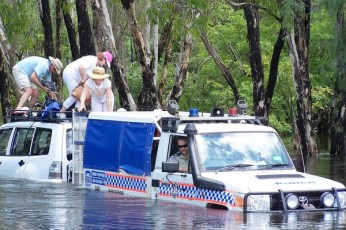
In Brazil floods and mudslides resulting from heavy rains have claimed the lives of over 500 people, according to the Christian Science Monitor and the New York Times. It is the country’s worst natural disaster. In Brisbane, Australia news sources here, here, and here report on the disastrous consequences of flood waters that peaked yesterday. Thens of thousands of people have lost their homes and businesses. After the jump please find a guest post from colleague Glenn Albrecht, Professor of Sustainability at Murdoch University in Western Australia, and author of the term “solastalgia” – psychic or existential distress caused by environmental change. Read the rest of this entry »
Tags: australian floods, Brazilian floods, environmental change and australian floods, Glenn Albrecht, glenn albrecht on australian floods, psychological impact of australian floods, solastalgia australian floods, soliphilia australian floods
Posted in environmental disaster, personal environmentalism | Leave a Comment »
January 9, 2011

from kvoa.com
-
Palin aide Rebecca Mansour
comments that drawing a line between the shootings in Arizona and Palin, or presumably any other, political rhetoric is “obscene”. She adds “where I come from the person that is actually shooting is the one that’s culpable.” Well, it is actually far more complicated. I would like to add a psychological perspective to
Matt Bai’s sound analysis of the role of political discourse in the Arizona shootings. I’m not an expert in the psychology of assassins. I am however a mental health expert who has worked in a previous hospital position with mentally ill people, some of whom were also convicted killers, and in one case, a mob assassin. My reasons for seeing a connection between Loughner’s behavior and vitriolic political rhetoric stems from an understanding of how people function. The breaking of even minor civil boundaries supports the expression of raw and unexamined impulses in anyone, let alone someone who is mentally ill.
For example, when many people are trapped in an elevator and one person has an intense emotional outburst, other people will also lose the ability to discipline their fear. This would be especially true of children or anyone else whose defenses are more fragile.
Civility serves as a psychological boundary. Internalized social rules act to regulate behavior and transform raw emotions into thoughtful considerations of self and other. Political leaders symbolize social norms. Individuals recognize in their leaders the emulation of boundaries that delineate what is acceptable from what is not. For some well-organized people this type of modeling is unnecessary, and they can tolerate some flexibility. They know the rules. Those who are very young, less balanced and who struggle with mental illness they need all the help they can get to contain themselves. When a mentally ill person feels the urge to kill, social mores help contain those impulses. Hopefully the containment will provide a killer time to moderate his feelings. When social leaders flippantly use metaphors of violence, or suggest the need for armed resistance – even if done as political tongue-in-cheek – the mentally ill person who has legal access to a semi-automatic pistol will understand this as permission to act on their impulses.
The rules that govern a parliament or a congress enable intense debate to take place while preserving the social contract. The reason that it is unacceptable to accuse the President of lying in a state of the Union address, or to use shotgun crosshairs to target political opponents, or to discuss political differences in terms of armed revolt is because those boundary violations permit anyone, and I mean anyone, to disregard their internal regulatory system and instead to act upon the pull of their internal demons. Metaphors of violence become a kind of societal permission for the relinquishing of self control.
It isn’t a cause and effect type thing. People will behave violently and assassins will kill. Civility toward one another, no matter what the differences are between us, serves only the purpose of not providing the context that will support any person’s insanity. It won’t prevent violence. It will however limit the power of any individual to enact their breakdown. Gun control would also help.
Tags: arizona shootings, civility and violence, crosshairs map, did rhetoric enable Loughner, Loughner and political rhetoric, Matt Bai political discourse, psychological perspective of rhetoric, relationship between rhetoric and violence, response to mansour, tucson shootings, why civility matters, why rhetoric matters
Posted in human interaction, mental illness | 1 Comment »
January 4, 2011

from insectidentification.org
The problem of bee colony collapse may be due to inbreeding and disease, and world populations are still in a free fall according to The Guardian. While wild bees might be contracting viruses and spreading them to each other, according to research reported by treehugger, the reality of colony collapse disorder threatens the pollination and production of our food sources. I’m wondering if bees are feeling stressed and therefore more vulnerable to disease, in the same way that humans can find themselves more susceptible to illness when under various types of psychic pressure. I’m not attributing human-like consciousness to bees. I am however assuming bees have immunological systems that can be impacted by increased production of cortisol or other glutocorticoid hormones, or their equivalents in insects. Can environmental change cause the type of stress in bees that can weaken their immunological defenses? Understanding what is happening to the bees is important to us for three reasons. Read the rest of this entry »
Tags: bee extinction, bee extinction and psychology, bees, colony collapse disorder, human impact of bee extinction
Posted in ecopsychcology, environmental disaster | Leave a Comment »
December 31, 2010

Mental health comes about from balance, sometimes internal, sometimes environmental and often the relationship between the two. As the New Year arrives, I’m taking a moment to toast some people who have restored balance. Here’s the list.
Read the rest of this entry »
Tags: Ashtanga yoga, Daily show 9/11 responders, ecopsychologists, John Campbell, New Year, New year hope, New year thank you, New Years inspiration, New Years toasts, New York Times thank you, psychoanalysis and environment seminar thank you, relational psychoanalysts, Ron Jenkins, Talkingpointsmemo thank you, Wesleyan University
Posted in holidays, relationships | Leave a Comment »
December 14, 2010

I have always thought of Christmas time as a good time; a kind, forgiving, charitable, pleasant time; the only time I know of in the long calendar of the year, when men and women seem by one consent to open their shut-up hearts freely.
Charles Dickens, A Christmas Carol
Don’t you just love the holidays? They evoke mixed feelings about family, self and society. What holiday meal doesn’t contain one spat between generations, an overwrought relative or an old political feud? Holidays also inevitably remind us of who is missing this year, those who have died as well as those simply not with us. Read the rest of this entry »
Tags: Christmas, Christmas Chanukah, Christmas cheer, Christmas Hanukah, christmas spirit, family christmas, holiday spirit, holidays, old-fashioned Christmas
Posted in holidays, human interaction, relationships | Leave a Comment »
August 19, 2010

Picture: Getty Images / Julian Finney
This blog has gone dark since the end of June. Why? Every morning the heat rose trapping me in a vapor of thick intoxication. When the sun burned high in the sky the humidity coated my skin in a waxy sweat. The news was no lighter. The every hour on the hour triviality emerging from the 24 hour news cycle bludgeoned my mind like high fever hallucinations. The summer that has seen the first effects of climate change has also been a summer of paralysis. Read the rest of this entry »
Tags: 14th amendment repeal, 2012, Captain "Sully" Sullenberger, climate change, climate change happening now, climate change intensifies, David Plouffe, Fox political contribution, global warming effects now, ground zero mosque, Josh Marshall, psychological reaction to climate change now, Robert Reich, Sarah Palin, slow economic recovery, summer 2010 heat wave, terror babies
Posted in climate change, ecopsychcology, environmental disaster, global warming, politics | Leave a Comment »



 Ordinary Earth ™