Healthy democracies depend on strong citizens to maintain, re-structure and build social institutions. Strong citizenry requires a capacity to think creatively, to operate with good character and to become fluent with diversity. A strongly bi-furcated class structure threatens our young adults coming of age precisely on those very dimensions. While economists and politicians work on the economy, psychology needs to get out into the field with young adults. Help working class kids overcome the psychological barriers to upward mobility. Challenge those who are affluent to develop internal life skills outside the safety net of their entitlements.
Coming of Age Young and Isolated
June 24, 2013When Psychological Troubles Meet the Internet
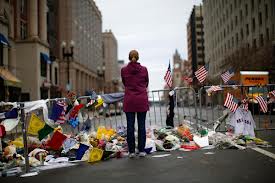
April 24, 2013Todays’s NYTimes suggests that the two suspects in the Bostan Marathon bombings may have been disenfranchised and troubled young people who found direction and guidance on the internet. More than Islam the central actor here is the the connectivity that enables anyone to develop relationships to those who espouse the best and and worst of human behavior. This brilliant analysis by Michiko Kakutani reviews what we can learn from the suspects’ electronic and digital path affirming that such connectivity has provided many the unprecedented opportunity to mourn a tragedy while offerring them an unprecedented opportunity to transform angst into destruction. This, of course, raises questions.
We Have To Talk About Violence
April 23, 2013I asked the graduate students in my child psychopathology class about their reactions to the Boston Marathon bombings. Their surprise that I would ask confused me. Was I really the first to ask?
It seems as though we haven’t found a way to have the tough, complicated discussions that might be the only thing we can do about violence and terrorism. It may be important to move on and get back to normal. But what if what has been going on isn’t normal? See below for an overview of my students’ and clients’ comments (printed anonymously to perserve confidentiality).
Terrorism and Limit-Setting
April 22, 2013At a moment when we mourn eight-year old Martin Richard, 23 year-old Lu Lingzi, 29 year-old Krystle Campbell and 26 year-old Officer Sean Collier as well as the 176 other victims of suspects Dzhokhar and Tamerlan Tsarnaev terrorist actions, isn’t it time to make peace with some limits on personal freedoms?
The Harmful Consequences of Diagnostic Categories
April 12, 2013Youthful Tendency Disorder, a term coined by The Onion, pokes fun at diagnostic categories. It satirizes the modern psychiatric and psychological observation of pathology in normal behavior.
Given the numbers of people suffering from serious and sometimes life threatening mental illness, is this humor fair?
Mental Health as a Management Strategy
January 27, 2013I was pleased to see Elyn R. Sak’s article in the New York Times today. Her story opens a new dialogue about mental illness. Instead of cultivating “patient” status and transforming people into fractions of who they could otherwise be, treatment for serious mental illness should focus on the management of symptoms. In this way the exact symptoms of mental illness can become sources of strength if not talent.
Is it the weather?
January 25, 2013Many people felt rather blue this week, feeling kind of sad and even hopeless. Each person had their own personal reasons for feeling depressed. I certainly wouldn’t want to underestimate depression’s depth of feeling nor challenge its force. It is my life’s work to help others untangle that mighty web that threatens to strangle a person’s sense of life. Yet, this depression had a collective aspect. This week, many people felt it.
It is mid-January. The excitement of the new year has worn off. In some places it is cold, or dark, or maybe rainy. These things do matter. Weather can affect your mood.
That being said where is the line between individual and collective moods?
It differs for each person, in every situation. It isn’t as important to create a general theory about where external influences end and internal forces begin as it is to believe in the significance of both.
Too often people forget that they are part of systems larger than themselves – families, communities, societies and, even, ecosystems. External influences whether they be social or environmental can affect our moods strongly, as can our biological proclivities as well as internal conflicts.
To feel better, or to cure a depression, it is important to locate and understand the external influences while also addressing the interiority of a bad or pained mood. Some things can’t be changed or controlled and a certain degree of suffering is a healthy component of the human condition. the part of it that any one individual can effect or change is often a fairly manageable task, especially if making use of the right support including but not limited to the verbal expression of talk therapy, the cognitive re-patterning of CBT, medication, exercise and diet.
In some ways, this can make the mountain of emptiness that often accompanies depression easier to conquer. Not all of it is under our control. Some piece of it has everything to do with dark days in January. The rest, that which comes from within, is a smaller piece that how it might otherwise feel.
Lets Honor the Angels We Lost by Coming Together
December 18, 2012Everyone is trying to do all they can to respond to the Newtown tragedy. Far away in a busy city, this piece at CNN.com is what I could do. May this time of year bring warmth, love and comfort to all. And change.
What to say to kids after the Sandy Hook school massacre in Newton
December 16, 2012I don’t have answers. I don’t have wisdom. I can only open my mind and my heart. Many parents and other adults wonder how to respond to this tragedy. They want to know how to talk to their kids. Here a list of sites offerring advice. Personally, I still can’t comprehend the reality of having to discuss mass murders – especially of young people – with our children (and each other.) When I once again talked to my kids about the unusual and rare event of a crazed gunman shooting everyone up, my daughter said, “Mommy, it isn’t rare.” She’s right. It really isn’t rare anymore.
So where does that leave us? Love kids. Hold them. Be real. Show your vulnerability. Most importantly don’t make it their job to fix this. Don’t ask them to get used to this and adjust to it. Most kids, especially teenagers, want to know that the adults in their life will take care of this problem and do everything they can to make it go away, or at least make it better. They want to be free to continue their childhoods. They want to study, play and confront evil one small step at a time. While some may want to process, most, I think, just want the grown-ups to handle it. They want neither the responsibility nor the legacy of this violence.
I’m ready to start, to be part of a dialogue that leads to change. Try the million child march. Or the Brady Center. We need a three-faced approach: better mental health, less cultural acceptance of extreme violence as entertainment, and less access to semiautomatic weapons. Yes we can – even if it seems impossible.
We can’t stop murder, evil, or reckless violence toward our children or anyone else’s children, nor toward each other. We can make it harder. We can set limits. We can be in charge. We can be the adults in the culture who will do everything possible to make the authority of goodness stronger than the forces of destruction.